Norman Borlaug for kids: a true picture book
Norman and the Mighty Wheat. How Norman Borlaug helped the world grow more food 10 pages, fact-checked, at three reading levels, read aloud.
The lesson: Hunger is a problem, and problems can be solved.
Read the first pages free
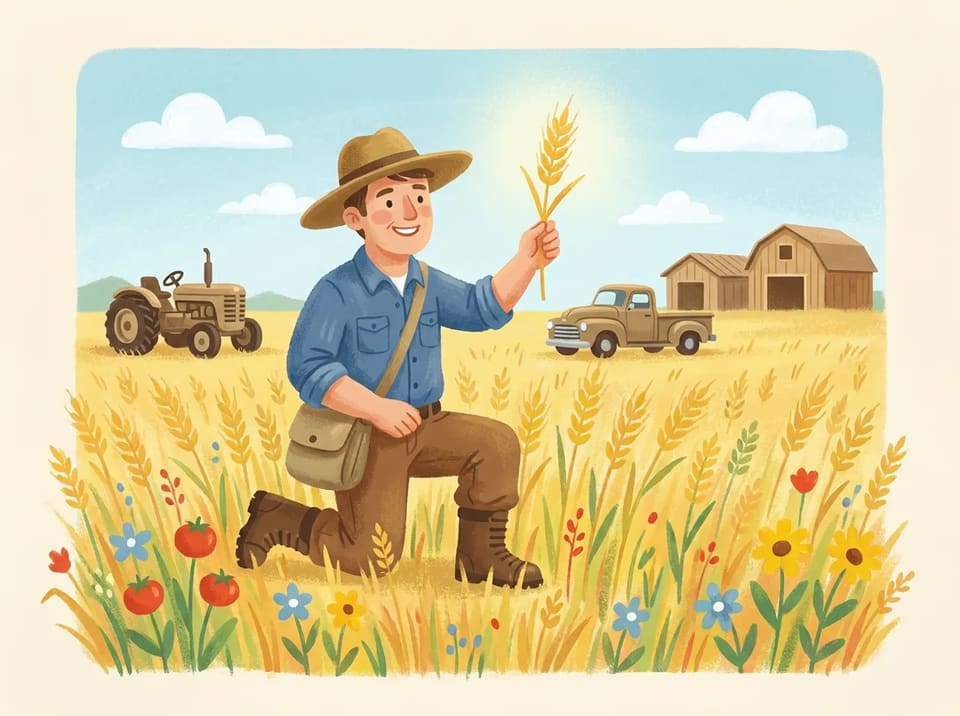
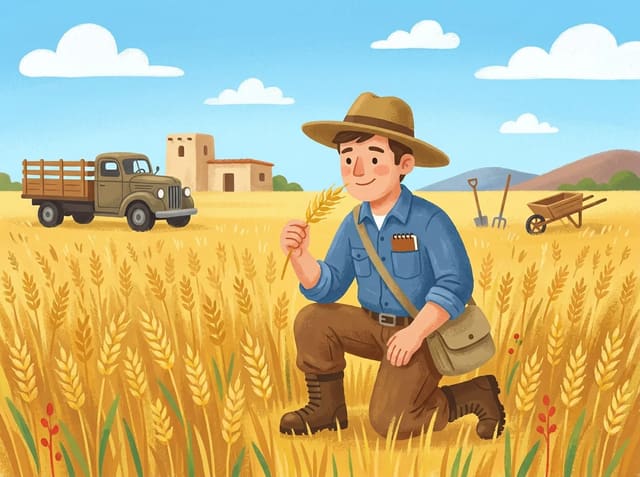
This is Norman. Norman works with wheat. Swish, swish, goes the wheat!
This is Norman Borlaug. Norman works with wheat. Wheat is a plant, and its grain can be made into bread. Norman wants to help it grow.
This is Norman Borlaug. His work was all about wheat, a grassy plant whose grain can be ground into flour for bread. Each stalk ends in a head, the bushy top that holds the grain. In 1944, Norman began work on a program with a big goal: to grow more wheat. More wheat means more food on more tables.
Page 1 of 10
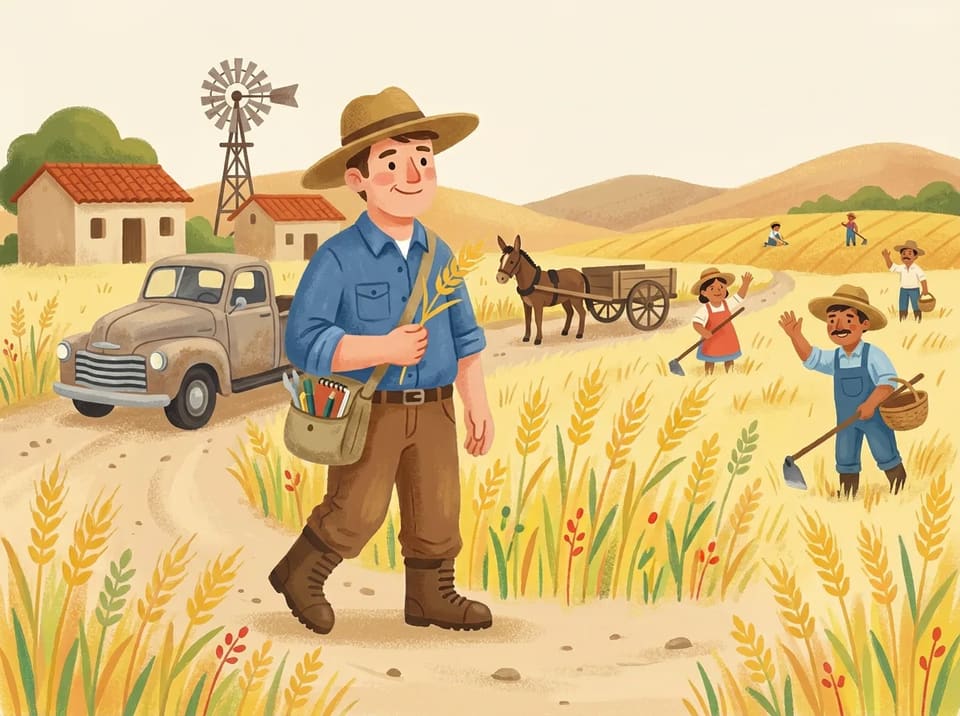
Norman goes to Mexico. Step, step, step! Time to grow more wheat.
In 1944, Norman moved to Mexico. He came to work on a program. The program had one big job: grow more wheat!
In 1944, Norman Borlaug moved to Mexico to work on a program to grow more wheat. A program is a team effort with a plan and a goal. This one was a big job, since more wheat could mean more food. Norman rolled up his sleeves and headed into the fields, where the real work of farming science gets done.
Page 2 of 10
Norman Borlaug: a timeline of true facts
- 1944 He moved to Mexico to work on a program to grow more wheat. source
- 1950s He bred short, sturdy wheat that resisted disease and could hold heavy heads of grain without falling over. source
- 1960s His wheat helped India and Pakistan grow much more food. This became known as the Green Revolution. source
- 1970 He won the Nobel Peace Prize. source
3 reading levels
- Read to me (ages 3–5)
- Read together (ages 6–8)
- I'll read (ages 9–12)
The same true story, written three ways. Little kids hear short, bouncy lines; big kids get the details and the numbers.
Quiz time
What plant did Norman work with?
Show the answer
Wheat.
Try this at home
- Be a plant breeder: plant a few wheat berries or grass seeds in two cups, give them water and sunlight, and check them each day. Draw which plants grow the strongest.
- Make a wheat test: tape a lump of clay to the top of a tall straw and to the top of a short straw, then stand them up in more clay. Which one falls over? Why do short, sturdy stalks win?
- Bake or buy a loaf of bread and find the word 'wheat' on the package. Talk about how a tiny grain from a field becomes the bread on your table.