Jonas Salk for kids: a true picture book
Jonas Salk and the Polio Pioneers. 10 pages, fact-checked, at three reading levels, read aloud.
Jonas Salk (1914–1995)
The lesson: Work on the problem that hurts the most people, then share the answer.


Scan with your iPhone cameraor open it in your browser
Books about scientists
Who was Jonas Salk?
Jonas Salk (1914–1995) was a doctor and scientist who made a vaccine against polio, a disease that could leave children unable to walk. In 1955, scientists announced that his vaccine was safe and worked. He never patented it and earned no money from it, because he wanted it shared as widely as possible.
| Born | 1914 |
|---|---|
| Died | 1995 |
| Known for | polio vaccine pioneer |
| The lesson | Work on the problem that hurts the most people, then share the answer. |
| Topics | Medicine, Scientists |
| The book | 10 pages, 3 reading levels, read aloud |
Read the first pages free
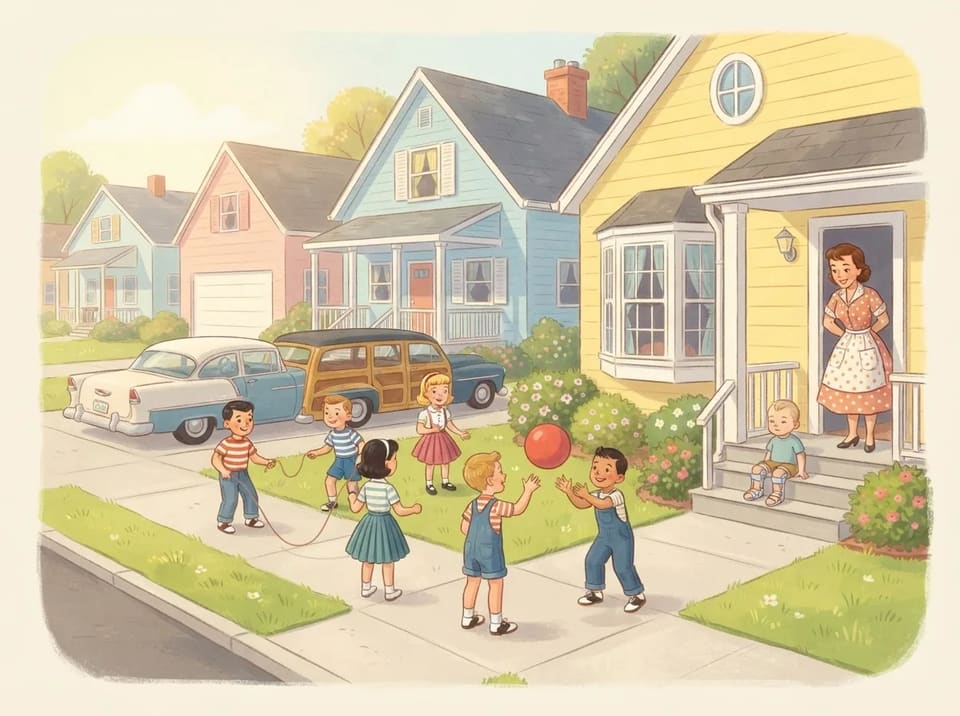
Long ago, a sickness called polio worried families all over the world. Some children who caught it needed wheelchairs. So parents kept their children away from swimming pools and fairs.
Long ago, a sickness called polio frightened families around the world. In the United States in 1952, it left thousands of people unable to move parts of their bodies. Some needed wheelchairs. Some needed iron lungs, giant machines that helped them breathe. Parents kept children away from pools and fairs.
Polio struck fear into families around the world. In 1952 alone, the United States counted nearly 58,000 cases, and more than 21,000 people were left with some paralysis: parts of their bodies would not move. Most of the victims were children. Some needed wheelchairs. Some lay inside iron lungs, large machines that helped them breathe. Parents, desperate for a cure, kept their children away from swimming pools and fairs.
Page 1 of 10
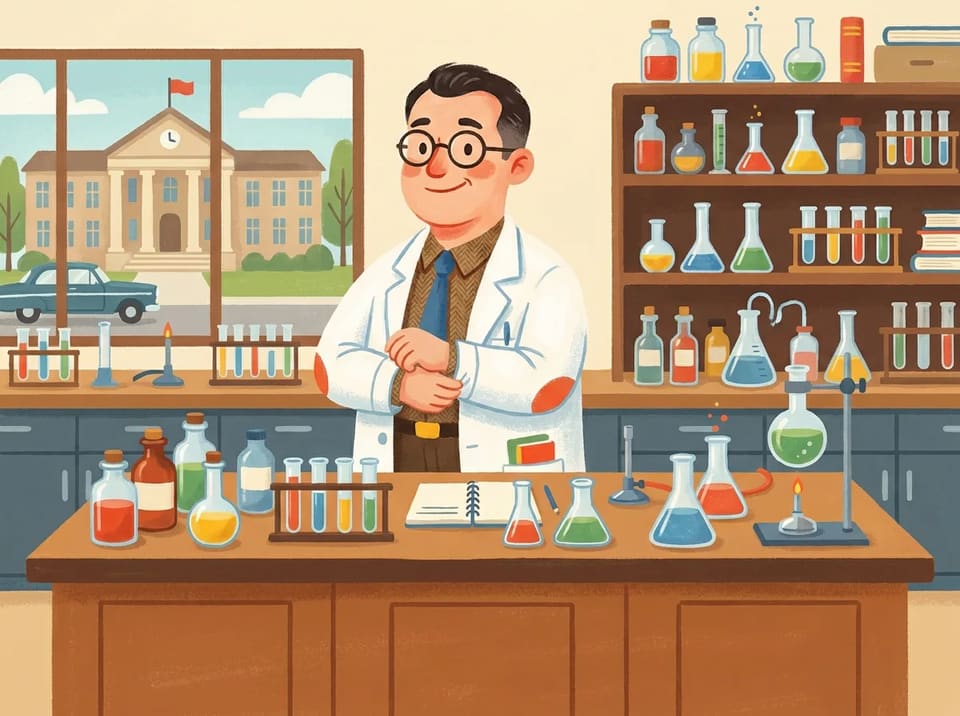
Jonas had helped make a shot against the flu. Now he wanted to make a shot against polio. He would work on it for seven long years.
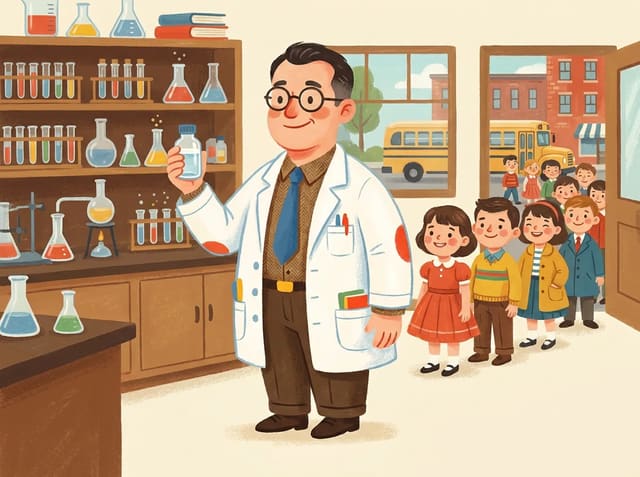
Jonas Salk got his own lab in Pittsburgh. He had helped make a flu vaccine, a shot that keeps people from getting sick. He wanted to help many people at once, not one patient at a time. For the next seven years, he worked to make a vaccine against polio.
In 1947, Jonas Salk got his own laboratory at the University of Pittsburgh School of Medicine. He had already helped perfect a flu vaccine that was soon widely used at army bases, and he had found one of the flu strains that went into it. He said he wanted to help humankind in general, not single patients. For the next seven years, he would devote himself to one goal: a vaccine against polio.
Page 2 of 10
Jonas Salk: a timeline of true facts
- Polio frightened families, and children could be paralyzed or die. source
- 1952 In the United States, the 1952 outbreak left more than 21,000 people with some degree of paralysis. source
- Some children needed wheelchairs or iron lungs, and parents kept children away from pools and fairs. source
- Once someone was infected with polio, there was no specific treatment for the disease. source
- 1950 Another researcher, Hilary Koprowski, tested a vaccine made with weakened live virus. source
- Some doctors tried using part of the blood of polio survivors, but there was too little to use widely. source
- 1947 Salk got his own laboratory at the University of Pittsburgh, although it was smaller than he hoped. source
- Salk had helped develop a flu vaccine before working on polio. source
- Salk wanted to help many people through research rather than treating patients one at a time. source
- 1948 After beginning a project to study types of poliovirus, Salk spent seven years working on a vaccine. source
- Researchers suspected that several types of poliovirus caused the disease and needed to identify them. source
- 1948 Salk was asked to find out whether there were more than the three known types of polio. source
- 1948 Salk gathered supplies and a team of researchers. source
- 1952 After tests on laboratory animals, Salk and staff at a children's home gave his vaccine to 43 children. source
- 1953 Salk presented the results of tests of his vaccine on 161 children. source
- 1953 Salk reported a successful small test on the radio. source
- 1954 In 1954, Salk's vaccine entered a huge test involving nearly two million children. source
- 1954 In the trial, some children received the vaccine, some received a harmless comparison shot, and others were observed without a shot. source
- 1955 On April 12, 1955, the vaccine was declared safe and effective, and people celebrated. source
- 1955 The trial results showed that Salk's vaccine was 80 to 90 percent effective at preventing paralytic polio. source
- While some researchers used weakened viruses, Salk chose killed virus because he believed it was safer. source
- 1955 Salk did not patent the vaccine or seek to profit from it, hoping it would reach people around the world. source
- The foundation and university had looked into a patent, but lawyers thought the methods used probably were not new enough to qualify. source
- 1955 People rushed to get vaccinated in the United States and around the world. source
- 1962 After the vaccine was introduced, the average yearly number of U.S. polio cases fell sharply. source
- Less than 25 years after Salk's vaccine was released, polio was no longer spreading within the United States. source
Questions kids ask about Jonas Salk
What did Jonas Salk invent?
Jonas Salk developed a vaccine against polio, a disease that could paralyze people. His vaccine used polio virus that had been killed, so it could protect people without infecting them. On April 12, 1955, scientists announced that it was safe and effective. source
Did Jonas Salk patent the polio vaccine?
No. When TV host Ed Murrow asked who owned the patent, Salk said the people did, that there was no patent, and asked if you could patent the sun. The groups behind the research did look into a patent, but lawyers decided the methods were likely not new enough. source
Did Jonas Salk test the vaccine on himself?
Yes. Before the big national test, Salk gave his vaccine to volunteers who had never had polio, including himself, a scientist from his lab, his wife and their children. All of them made antibodies against polio and had no bad reactions. source
Who were the Polio Pioneers?
The Polio Pioneers were children, ages six to nine, who took part in a huge national test of Salk's vaccine that began in 1954. In 1955 the vaccine was announced as safe and effective. By 1962, yearly U.S. polio cases had dropped from more than 45,000 to 910. source
3 reading levels
- Read to me (ages 3–5)
- Read together (ages 6–8)
- I'll read (ages 9–12)
The same true story, written three ways. Little kids hear short, bouncy lines; big kids get the details and the numbers.
Quiz time
Why did Jonas use killed polio germs in his shot?
Show the answer
He believed they were safer.
Try this at home
- Run a fair test like the Polio Pioneers: plant two seeds the same way, water only one, and compare them each day for a week.
- Play pass-the-germ: put a pinch of glitter on one person's hand, shake hands around the room, and see how far it spreads. Then wash it all off with soap.
- Line up 20 toy figures. Give half of them a sticker for a pretend shot and leave half without, then talk about why a test needs both groups.
More true heroes
Read the whole book tonight.
On iPhone, iPad and Android, and in any web browser.
Scan with your iPhone cameraor open it in your browser