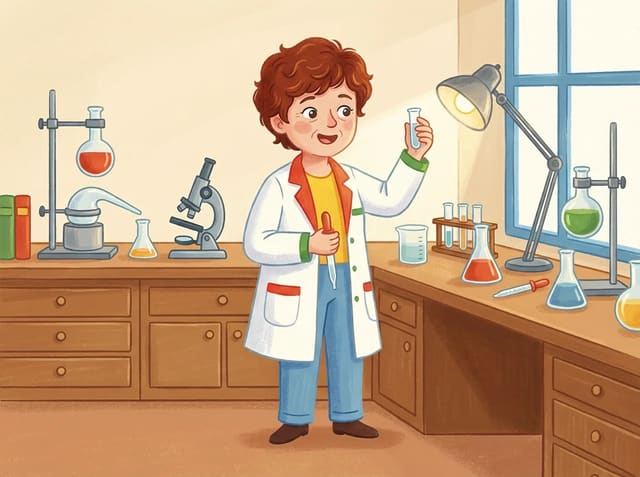
Katalin Kariko for kids: a true picture book
Katalin and the Tiny Messages. 10 pages, fact-checked, at three reading levels, read aloud.
Katalin Kariko (born 1955)
The lesson: Keep going when people tell you your idea will not work.


Scan with your iPhone cameraor open it in your browser
Books about scientists
Who is Katalin Karikó?
Katalin Karikó is a Hungarian-born scientist who spent years working on messenger RNA, or mRNA, even when few people believed in it. With Drew Weissman, she found a way to change mRNA so the body's defenses would not attack it. Their work made mRNA COVID-19 vaccines possible, and in 2023 they won a Nobel Prize.
| Born | 1955 |
|---|---|
| Known for | Nobel-winning mRNA vaccine scientist |
| The lesson | Keep going when people tell you your idea will not work. |
| Topics | Medicine, Scientists |
| The book | 10 pages, 3 reading levels, read aloud |
Read the first pages free
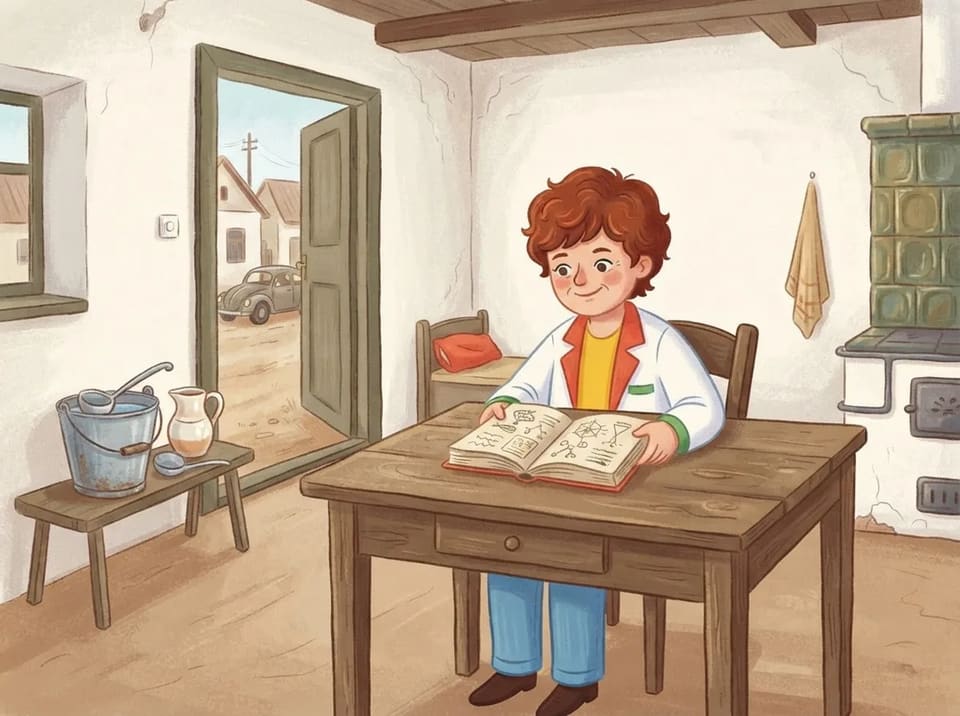
When Katalin was a little girl in Hungary, her small house had no fridge, no TV and no water tap! But Katalin was very good at science.
When Katalin Karikó was a girl in Hungary, her small home had no running water, no fridge and no TV. But Katalin was great at science. She came in third in a biology contest for the whole country! Her work in science would one day take her far from home.
Katalin Karikó was born in Szolnok, Hungary, and grew up in the town of Kisújszállás, in a small home with no running water, no refrigerator and no television. What she did have was a talent for science. She excelled at it in school, and in a biology competition she won third place in all of Hungary. Her work in science would one day carry her far from that small home.
Page 1 of 10
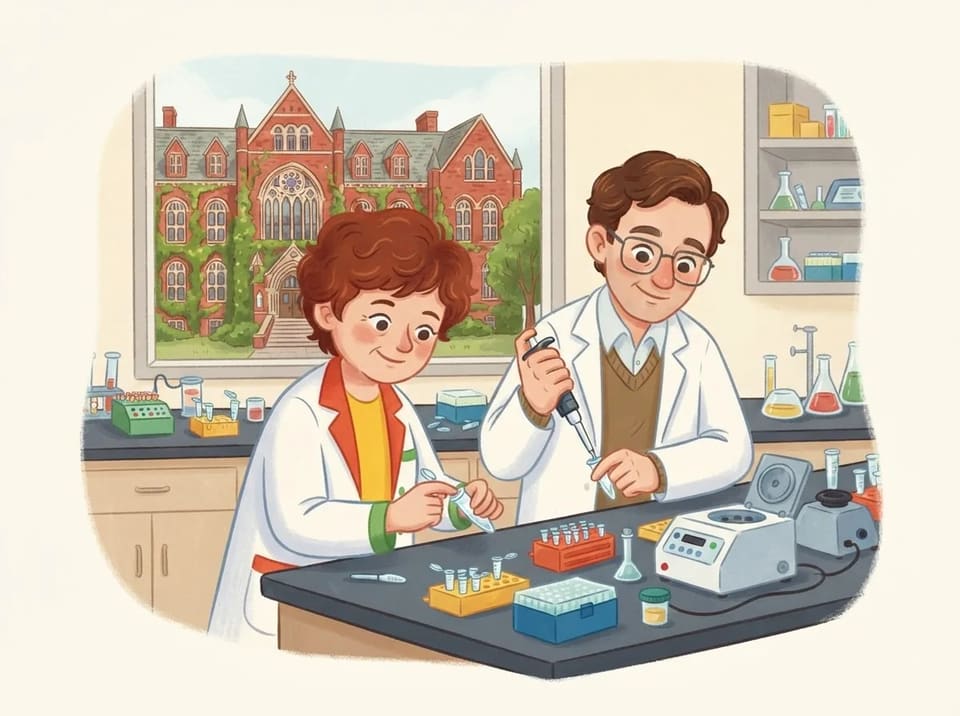
When her lab ran out of money, Katalin looked for science work in other countries. Later, in America, she studied tiny messages inside us that tell our bodies what to build. She wanted to turn them into medicine!
And it did. When her lab in Hungary ran out of money, Katalin looked for work in other countries. Years later, in 1989, a university in America hired her to study tiny messages inside our cells. These messages tell a cell how to build the parts it needs. Katalin wanted to use them as medicine.
In 1985, her lab in Hungary lost its funding, and Karikó looked for work in other countries. In 1989, the University of Pennsylvania in the United States hired her to work with heart doctor Elliot Barnathan on messenger RNA, or mRNA. Inside our cells, the instructions stored in DNA are copied into mRNA, which the cell uses as a template for making proteins, the tiny machines and building blocks of life. Karikó was devoted to one goal: finding ways to use mRNA as medicine.
Page 2 of 10
Katalin Kariko: a timeline of true facts
- Katalin grew up in a small Hungarian home without running water, a refrigerator, or a television. source
- Before the pandemic, vaccines made with killed or weakened viruses protected people against diseases such as measles. source
- Making some vaccines required growing large numbers of cells, which made rapid production difficult. source
- Scientists knew that cells use messenger RNA as a template for making proteins. source
- 1989 Early experiments showed that lab-made mRNA could give living cells instructions to make a chosen protein. source
- In the 1990s, many researchers and companies doubted that mRNA would be useful. source
- As a student in Hungary, Katalin loved science and did well in a biology competition. source
- 1985 After her Hungarian lab lost its funding, Katalin looked for work in another country. source
- Katalin wanted to develop ways to use mRNA as a treatment. source
- 1990 In 1990, she proposed using mRNA for gene therapy. source
- Lab-made mRNA was fragile and hard to deliver to the right cells. source
- Using lab-made mRNA in the body could cause unwanted inflammation. source
- 1989 Katalin began working on mRNA with heart doctor Elliot Barnathan at the University of Pennsylvania. source
- 1995 After many applications for research funding were rejected, the university demoted her. source
- 1995 Even after the demotion, Katalin stayed and continued studying mRNA. source
- 1997 Katalin met vaccine researcher Drew Weissman at a photocopier, and they talked about the difficulty of funding RNA research. source
- Together, Katalin and Drew worked through problems one at a time. source
- Katalin noticed that a different kind of RNA used in an experiment did not cause the same immune reaction as mRNA. source
- The pair wondered whether chemical differences between natural and lab-made RNA could explain the inflammation. source
- 2005 They found that replacing one building block of mRNA with another reduced the immune response. source
- 2005 Their important results were published in 2005, fifteen years before the COVID-19 pandemic. source
- They tested different versions of mRNA, each with its own chemical changes, on immune cells. source
- 2010 Later studies showed that their modified mRNA also helped cells make much more protein. source
- 2020 In 2020, their technology was used in COVID-19 vaccines made by BioNTech and Pfizer and by Moderna. source
- COVID-19 mRNA vaccines helped prevent serious illness, hospital stays, and death. source
- Researchers are also investigating mRNA treatments for cancer and other diseases. source
Questions kids ask about Katalin Kariko
What did Katalin Karikó discover?
When scientists put lab-made mRNA into cells, the body's defenses treated it as an invader and caused inflammation. Karikó and Drew Weissman found that changing some of mRNA's chemical letters, called bases, almost stopped this reaction. It also helped cells make more of the protein the mRNA carried instructions for. source
What is mRNA?
mRNA, or messenger RNA, carries genetic information from a cell's DNA. The cell uses it as a pattern for building proteins. The mRNA COVID-19 vaccines carry instructions for a protein from the surface of the virus, which helps the body learn to fight it. source
When did Katalin Karikó win the Nobel Prize?
Katalin Karikó won the 2023 Nobel Prize in Physiology or Medicine, sharing it with Drew Weissman. The prize honored their discoveries about changing the bases of mRNA, which made effective mRNA vaccines against COVID-19 possible. source
Why did Katalin Karikó hide money in a teddy bear?
In 1985, Karikó moved from Hungary to the United States with her husband and two-year-old daughter. Hungary's government at the time let her take only $100 out of the country, so she sold her car and sewed a little more than $1,000 into her daughter's teddy bear. source
3 reading levels
- Read to me (ages 3–5)
- Read together (ages 6–8)
- I'll read (ages 9–12)
The same true story, written three ways. Little kids hear short, bouncy lines; big kids get the details and the numbers.
Quiz time
What did Katalin want to turn tiny cell messages into?
Show the answer
Medicine.
Try this at home
- Write a recipe card for a simple snack, like a cracker with cheese, and hand it to a grown-up to follow exactly. Your card is like a message that tells a cell what to build.
- Change just one word in a sentence, like The cat sat on the mat to The cat sat on the hat, and see how one small change can change the whole meaning.
- Try an experiment with a comparison: put one seed on a wet paper towel and one on a dry towel. The dry one is your control. Check them each day and compare.
More true heroes
Read the whole book tonight.
On iPhone, iPad and Android, and in any web browser.
Scan with your iPhone cameraor open it in your browser