The best STEM apps for kids in 2026
Free picks: PBS KIDS Games for ages 2 to 8, ScratchJr for coding at 5 to 7, Seek for nature. Prodigy suits math in grades 1 to 8, and Simple Machines suits physics at 4 and up. For one app that covers engineering for kids 3 to 12, with most of the work off the screen, try Tumbly (ours).
Updated November 2026 by the Tumbly team. We make Tumbly. It’s last here: the apps run from free and simplest to the one that covers engineering for kids from 3 all the way to 12 and moves the work off the screen. Below is where each one is the better pick.
The six STEM apps compared
| App | Best for | Price, November 2026 | Runs on | Free part | Standout | Catch |
|---|---|---|---|---|---|---|
| PBS KIDS Games | A free mix of science and math games for ages 2 to 8 | Free | iPhone, iPad, Android and pbskids.org | All 280+ games, its maker says | Games with characters kids know from PBS shows, in English and Spanish | Stops at 8. Short games across many subjects, not one STEM path. |
| ScratchJr | A first taste of coding at 5 to 7 | Free | iPad, Android tablets and Chromebooks | All of it | Kids make their own animated stories and games from picture blocks | No store update since November 2023. Made for tablets. |
| Seek by iNaturalist | Science outside: bugs, birds, plants and mushrooms | Free | iPhone, iPad and Android | All of it | No sign-up, and no user data collected by default, its maker says | Only as good as what’s outside. Asks for your location to suggest local species. |
| Simple Machines by Tinybop | Physics play for kids 4 and up | $2.99 on the App Store, $3.99 on Google Play | iPhone, iPad, Android and Windows | None. A free handbook of questions to go with it. | Six real machines kids can change, then see what the forces do | One topic per app. Last App Store update April 2025. |
| Prodigy Math | Math practice in grades 1 to 8 | Math is free. Memberships from $9.95 a month or $58.95 a year. | Any web browser, iPhone, iPad and Android | The math questions | Math questions inside a role-playing game, matched to state standards, its maker says | Science and many in-game rewards are for members only. |
| Tumbly: Kids Engineering Games | Kids 3 to 12, brothers and sisters of different ages, and kids who’d rather build than tap | Free to start, Family $7.99/mo | iPhone, iPad, Android (US) and any web browser | A try of each game. Free builds and the first pages of its books open on tumbly.ai with no sign-up. | Designs a build from the bricks on your table, and tells the story of the bridge the car is crossing | A grown-up signs in first. New, with no App Store ratings yet. Not a coding or math course. |
Prices and platforms come from each maker’s site and its US App Store and Google Play listings, read November 21, 2026. Check the listing before you buy.
The six apps, one by one
PBS KIDS Games
What it is. More than 280 free games from PBS KIDS shows such as Wild Kratts, Weather Hunters and Elinor Wonders Why, for ages 2 to 8, with science, math, reading and art games (App Store). PBS KIDS also has games on pbskids.org/games.
Price. Free.
Good at. A safe, kid-friendly place to tap around, its maker says, with characters kids already know, in English and Spanish.
Not so good at. It stops at 8, and each game is short, so it’s a mix more than a path through one subject.
Pick it if your kid is under 8 and you want free. On the App Store it has 4.4 stars from 372,745 ratings (November 21, 2026).
ScratchJr
What it is. Coding for kids 5 to 7. They snap picture blocks together to make characters move, jump, dance and sing, and add their own voices and drawings (ScratchJr). It came out of Tufts University’s DevTech Research Group, the MIT Media Lab and the Playful Invention Company.
Price. Free.
Good at. Kids make something of their own, not just solve the next level. When they outgrow it, Scratch, its big sister for 8 and up, is on the web at scratch.mit.edu.
Not so good at. Both store listings were last updated in November 2023. It’s made for tablets: the Android version needs a 7-inch screen or bigger.
Pick it if what you really want to know is whether your kid likes to code. On the App Store it has 3.9 stars from 1,911 ratings (November 21, 2026).
Seek by iNaturalist
What it is. Point the camera at a flower, bug or mushroom and Seek tries to name it, drawing on millions of observations from iNaturalist, a nonprofit. Kids earn badges for the kinds of living things they find (App Store).
Price. Free.
Good at. Getting kids outside, and privacy: Seek needs no sign-up and collects no user data by default, its maker says. It obscures your exact location while still suggesting species from your area (Google Play).
Not so good at. It needs something alive in front of the camera, so it’s a walk app, not a rainy-day app. Signing in to iNaturalist to share finds is for 13 and up, or with a parent’s permission.
Pick it if your kid collects rocks and bugs in their pockets. On the App Store it has 4.8 stars from 30,919 ratings (November 21, 2026).
Simple Machines by Tinybop
What it is. A sandbox of six simple machines: levers, pulleys, inclined planes, wedges, wheels and axles, and screws. Kids change each machine and see how it changes the direction, distance or strength of a force (Tinybop).
Price. $2.99 on the App Store, $3.99 on Google Play (November 21, 2026). Tinybop’s free handbook adds questions to talk about.
Good at. Showing physics instead of explaining it. Tinybop says its apps are tested for and by kids 4 and up.
Not so good at. It covers one topic, and the App Store version was last updated in April 2025.
Pick it if your kid likes to take things apart to see how they work.
Prodigy Math
What it is. A role-playing game where kids win battles by answering math questions. Prodigy says the questions adapt to each child and follow state standards such as Common Core and TEKS (Google Play). It’s for grades 1 to 8.
Price. The math is free. Memberships run from Core at $9.95 a month or $58.95 a year to Ultra at $19.95 a month or $118.95 a year, and add science, more games and more in-game rewards (Prodigy, November 21, 2026).
Good at. Math practice wrapped in a game. It plays in a web browser as well as on phones and tablets, and parents get a free account to see what their kid is working on.
Not so good at. Members level up faster and get pets and member-only areas, its Google Play listing says. Science is members only.
Pick it if your kid needs math practice and loves a video game. On the App Store it has 4.8 stars from 256,676 ratings (November 21, 2026).
Tumbly: Kids Engineering Games
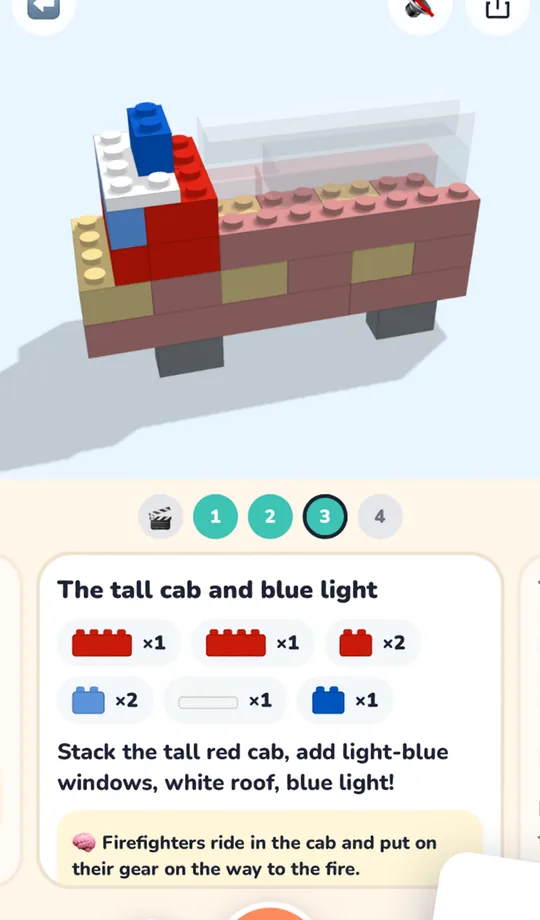
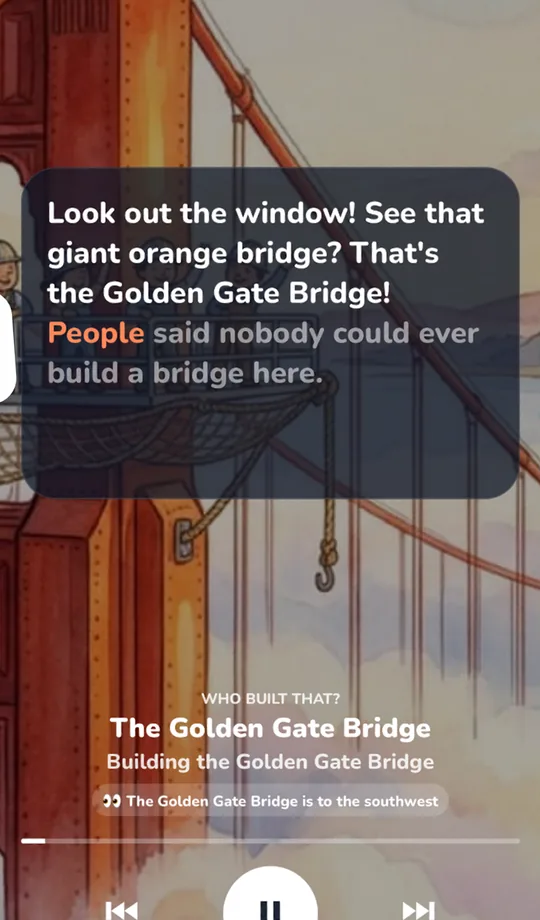
What it is. Tumbly puts four engineering games for kids 3 to 12 behind one grown-up sign-up. Tumbly Blocks looks at a photo of the bricks on your table and designs the castle or jet your kid asks for from only those bricks, step by step, with 80+ ready-made builds besides. Tumbly Drive tells the true story of the bridge, fort or river the car is passing, read aloud, then asks the back seat a question. Tumbly Inventors reads true picture books about inventors and engineers at three reading levels. Tumbly Workbooks makes color workbooks to print, set in whatever your kid loves this week.


Price. Tumbly is free to start, and Tumbly Family is $7.99 a month. The free plan is a try of each game. Here’s what each plan costs. No ads.
Good at. One app for a 4-year-old and a 10-year-old: each kid’s age sets the size of a build, the length of a story and the reading level of a book. Most of the work happens away from the screen, with real bricks, a view out of the window or a pencil.
Not so good at. Tumbly doesn’t teach coding, and it isn’t a math course. It’s new, so the App Store shows no ratings yet (November 21, 2026). Blocks needs bricks, and Drive is for car rides. On Android it’s on Google Play in the US only.
Pick it if your kids are different ages, or yours would rather build than tap.
Which one for which age
- 2 to 4: PBS KIDS Games, free. Tumbly from 3, with big-brick builds and books read aloud.
- 5 to 7: ScratchJr for coding, Simple Machines for physics, Tumbly for building and true stories, Seek on a walk with a grown-up.
- 8 to 12: Prodigy Math for practice, Scratch on the web for coding, Tumbly for bigger builds and longer books, Seek on a hike.
How we chose
STEM is science, technology, engineering and math. We looked for apps where kids do one of those things (build, code, observe, solve) rather than watch it, and kept one strong pick for each job so you can choose by what your kid needs.
- Made for kids under 13, with an age range from the maker.
- A price a parent can see, from the maker’s own site or store listing, read November 21, 2026.
- Still in the US App Store or Google Play today, with its last update date. Many lists that rank for this search were written between 2015 and 2024, and one names apps we couldn’t find on the US App Store on November 21, 2026.
- Where it runs, because a Chromebook, a hand-me-down Android tablet and an iPad need different answers.
What we did ourselves. On November 21, 2026 we opened Tumbly’s web app and its free pages in a phone-sized browser: tumbly.ai/play asks a grown-up to sign in with Apple, Google or an emailed code before kids play, while the brick dragon build (42 pieces, 5 steps) and the Wright brothers book open with no sign-up. We opened pbskids.org/games the same way: it shows the games and, on a phone, first suggests the app. We didn’t install the other apps; everything about them comes from their makers.
Left out. Khan Academy Kids is free, for ages 2 to 8, but it’s mostly reading and math, so it fits a list of learning apps better than STEM (App Store). For a list of engineering apps only, with Tami’s Tower and Poly Bridge 3, see the best engineering apps for kids 3 to 12.
Questions parents ask
What is the best STEM app for kids?
It depends on the kid. For free coding at 5 to 7, ScratchJr. For science outside, Seek by iNaturalist. For math practice in grades 1 to 8, Prodigy Math. For one app that covers kids from 3 to 12 and sends them to the brick bin, the car window and a printed page, Tumbly, which we make.
Are there free STEM apps for kids?
Yes. ScratchJr, Seek by iNaturalist and PBS KIDS Games are free, and Prodigy’s math questions are free. Tumbly is free to start, with a try of each game. Simple Machines by Tinybop is paid: $2.99 on the App Store and $3.99 on Google Play on November 21, 2026.
What are some free online STEM games for kids?
PBS KIDS has its games at pbskids.org/games, for ages 2 to 8, and Prodigy Math plays in a web browser. Tumbly runs in any browser at tumbly.ai/play, and its free brick builds and the first pages of its true books open on tumbly.ai with no sign-up.
What is a good STEM app for a 5-year-old?
ScratchJr is made for 5 to 7. PBS KIDS Games covers 2 to 8, and Simple Machines is for 4 and up. Tumbly starts at 3, and each kid’s age sets the size of a build, the length of a story and the reading level of a book.
What are some good apps for learning science?
Seek by iNaturalist names the plants, bugs and birds your kid points the camera at. Simple Machines lets kids poke at levers, pulleys and screws. PBS KIDS Games has science games for ages 2 to 8, and Prodigy has science games for members. Tumbly’s Drive tells true stories about how bridges, roads and rivers work.
Do STEM apps keep kids on a screen?
Most do. Two apps here are built around the world off the screen: Seek sends kids outside to find living things, and most of Tumbly’s games end at the brick bin, the car window or a printed workbook.
Is Tumbly connected to the other apps on this page?
No. We make Tumbly. We have no connection to the Scratch Foundation, iNaturalist, Tinybop, Prodigy Education or PBS KIDS, and nobody paid to be on this list.
Try Tumbly
Engineering games for kids 3 to 12. Free to start.
More from Tumbly
Sources
Every fact about another app comes from its maker’s site or its US App Store or Google Play listing, read November 21, 2026. Star ratings are the App Store’s on that day. The “pick it if” lines are our own judgment.
- Tumbly: Kids Engineering Games, App Store: apps.apple.com/us/app/id6820330287
- Tumbly: Kids Engineering Games, Google Play: play.google.com/store/apps/details?id=ai.tumbly.app
- ScratchJr, App Store: apps.apple.com/us/app/id895485086
- ScratchJr, Google Play: play.google.com/store/apps/details?id=org.scratchjr.android
- ScratchJr: About: www.scratchjr.org/about/info
- Seek by iNaturalist, App Store: apps.apple.com/us/app/id1353224144
- Seek by iNaturalist, Google Play: play.google.com/store/apps/details?id=org.inaturalist.seek
- Simple Machines by Tinybop, App Store: apps.apple.com/us/app/id936966570
- Simple Machines by Tinybop, Google Play: play.google.com/store/apps/details?id=com.tinybop.machines.paid
- Tinybop: Simple Machines: tinybop.com/apps/simple-machines
- Prodigy Math Game, App Store: apps.apple.com/us/app/id950795722
- Prodigy Math, Google Play: play.google.com/store/apps/details?id=com.prodigygame.prodigy
- Prodigy: Math Memberships: www.prodigygame.com/Memberships/math/
- PBS KIDS Games, App Store: apps.apple.com/us/app/id1050773989
- PBS KIDS Games, Google Play: play.google.com/store/apps/details?id=org.pbskids.gamesapp
- PBS KIDS: Games: pbskids.org/games/
- Khan Academy Kids, App Store: apps.apple.com/us/app/id1378467217