Inventors and firsts
Can the Moon move this bay's water?
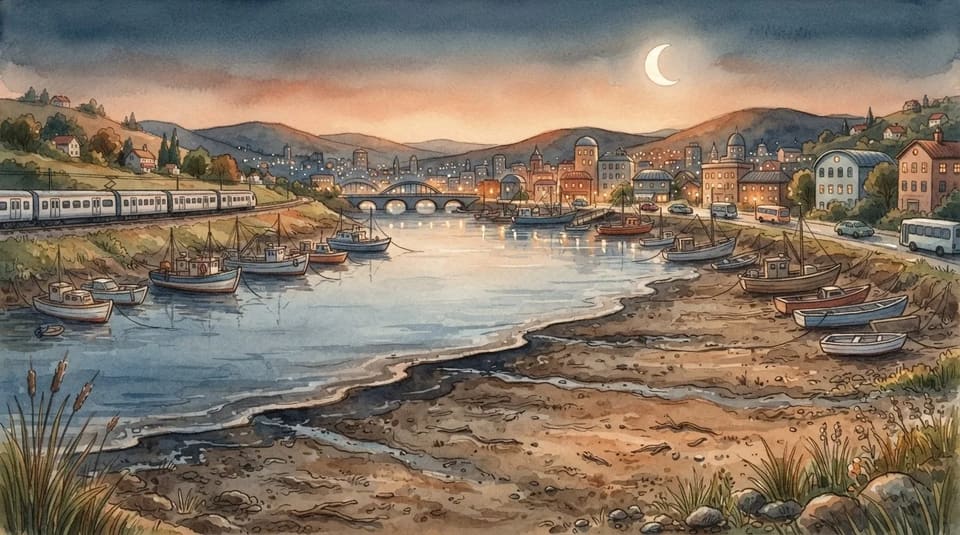
How the Moon makes tides. A true how-it-works story for kids 6–13.
The Tide story, read aloud
Look out the window at the salty water beside our road. It looks calm, but it never sits still. Twice a day in many places, it slowly climbs up the shore, then slides back down. That's called the tide. So who is moving all that water? The Moon!
It's way up in the sky, but its gravity gives the ocean an invisible tug. That tug makes a giant bulge of water, and as the Earth spins, places slide into the bulge and out again. The Sun helps with a gentle tug too. But here's the twist. The shape of the coast and the bumpy ground under the water change how the tide behaves. Water squeezing into a narrow bay is like a crowd of kids squeezing through one school bus door.
It bunches up and can arrive late. So the Moon pulls, but the bay decides how to dance! Look at the shore. Can you spot a wet, dark line where the water was higher before?
Quiz the back seat
What gives the ocean the tug that makes tides?
Show the answer
The Moon. The Moon! And the Sun helps with its own gentle tug too.
Tide facts for kids
- Tides are caused mainly by the gravity of the Moon and the Sun, along with Earth's spin.
- The shape of coastlines and the sea floor strongly change how tides behave in each place.
- Tide gauges at fixed stations measure water level over time.
The Tide story, read aloud
On this drive along the salt water, the edge of the bay is quietly creeping up or down right now, even if it looks perfectly still. That slow rise and fall is called the tide. So here's a puzzle: can the Moon, about a quarter of a million miles away, really move this water? Let's follow one floating log to find out. Picture it bobbing near the shore at high tide, water lapping the rocks. Hours later, that same log is lying on wet mud, stranded like a phone with zero battery. What happened?
The Moon's gravity tugs on Earth's oceans, pulling hardest on the side closest to it, so the water there heaps into a giant, gentle bulge. Another bulge forms on the far side, because the Moon tugs the solid Earth a bit more than that faraway water. As Earth spins, our shore passes through both bulges, so the log floats, then sits, then floats again. The Sun helps a little too. Make a guess right now: is the tide high or low? A dark, wet line on rocks or pilings means the water was just up there. Here's the twist: the Moon is only half the story.
The shape of the coast and the underwater bottom change everything. In a long, narrow bay, water sloshes like bathwater when you scoot, and if the slosh matches the tide's rhythm, it grows. In Canada's Bay of Fundy, tides can rise higher than a four-story building. Imagine a log there, floating high above where it sat on the mud earlier! So the Moon starts the tide, but this bay's own shape decides how it moves. Tonight, right on schedule, the log will float again.
Quiz the back seat
Besides the Moon, what changes how big a bay's tides get?
Show the answer
The shape of the coast and seafloor. The shape of the coast and seafloor! And the Sun pulls on the oceans too, just less than the Moon.
Tide facts for kids
- Tides come mainly from the gravity of the Moon and the Sun, plus Earth's spin.
- The shape of coastlines and the seafloor strongly changes how tides behave in each place.
- Tide gauges at fixed stations measure water level over time.
Questions kids ask about Tide
What causes tides?
The gravity of the Moon, with help from the Sun, tugs on the ocean and makes the water rise and fall.
Why are tides different in different places?
The shape of the coast and the bumpy ground under the water change how high the tide gets and when it arrives.
How can you tell where the tide was?
Look for a dark, wet line on the shore where the water reached when it was higher.
For grown-ups
Written with AI from public sources, then checked claim by claim against the sources below before it was published; stories that don't pass stay off the app and this site. Narration is pre-recorded, and nothing you do on this page is tied to your kids.
Sources
- oceanservice.noaa.gov/education/tutorial_tides/tides03_gravity.html
- science.nasa.gov/moon/tides
- education.nationalgeographic.org/resource/cause-effect-tides
- oceanservice.noaa.gov/education/tutorial_tides/tides02_cause.html
- en.wikipedia.org/wiki/Tide
- noc.ac.uk/discover-the-ocean/oceans-explained/tides-explained
- mycoast.org/nj/tides
- britannica.com/science/How-Far-Is-the-Moon-From-Earth
More stories about how things work
 Inventors and firsts The First Thing Scanners Bought
See all those shops we're passing? At their checkouts, a little red light reads black stripes on every box.
 Who built that? The Bridge That Grows
Out the window is the highway, with bridges and overpasses carrying our road over rivers and other roads. And every bridge has a secret…
 Houses A House That Came by Train
Look at all the houses on this street! Every house is made of lots of pieces.
 Cars and roads The Car That Was a Tricycle
On this road, cars roll along all around us, and every one has wheels. But the very first real car, the kind people could buy, had only…
Build one with bricks
Between stories: 25 road trip games for kids · Road trip bingo cards · Road trip trivia · Christmas light scavenger hunt · Christmas trivia
Town and county names: GeoNames (CC BY 4.0).