Who built that?
Can a tunnel change its job?
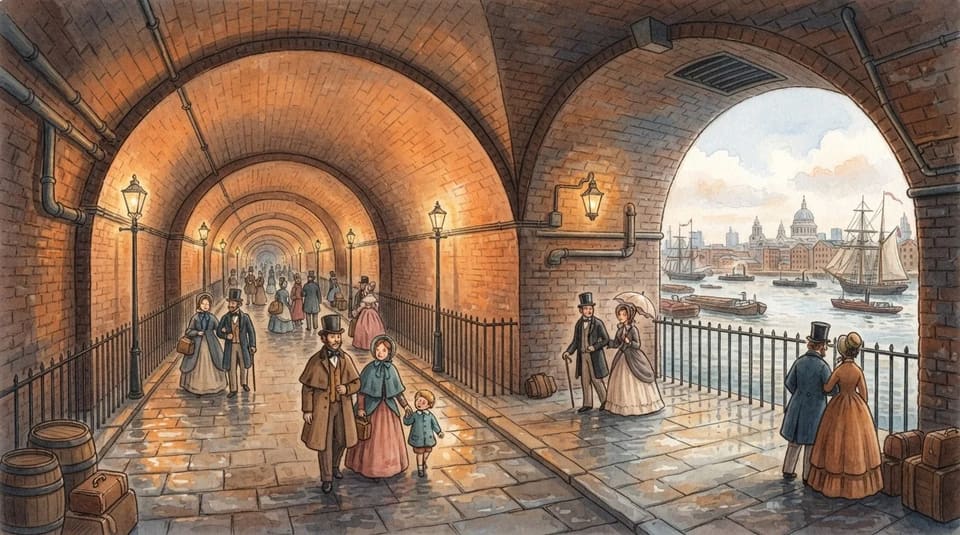
London's Thames Tunnel. A true how-it-works story for kids 6–10.
How things work stories
The Thames Tunnel story, read aloud
On this road, tunnels carry us right through the hills. A tunnel is a long hole dug through the ground, so we can travel inside it. But can a tunnel change its job? Long ago, before there were cars, a dad named Marc Brunel and his son Isambard wanted to dig a tunnel in London. Not under a hill. Under a river! Big ships sailed there, and a bridge would block their way.
Digging under wet mud is very hard, because mud wants to fall in on you. So Marc built a giant digging shield, like a big metal box pushed into the dirt. Workers stood inside its little rooms and dug a tiny bit at a time. Then bricks went up behind them, so the roof stayed strong. People think Marc got the idea from a little worm that chews tunnels through wooden ships! Sometimes river water broke in, and they pumped it out and kept going. Next time we drive into a tunnel, count its lights with me.
The tunnel was made for wagons pulled by horses. But the ramps for the horses were never built! So people walked through instead, and came from all over just to see it. Later, train tracks went inside, and the walking tunnel became a train tunnel. Trains still rumble through it today, deep under the river, the same old tunnel with a brand new job.
Quiz the back seat
Who was the Thames Tunnel first made for?
Show the answer
Horses pulling wagons. Horses pulling wagons! But the horses never got their ramps, so people walked through it first.
Thames Tunnel facts for kids
- The Thames Tunnel was the first tunnel known to be built successfully under a river that ships sail on.
- Marc Brunel and his son Isambard built it using a tunnelling shield Marc helped invent.
- It was meant for horse-drawn carriages, was mostly used by walkers, and became a railway tunnel in 1869.
Questions kids ask about Thames Tunnel
Who built the Thames Tunnel?
Marc Brunel and his son Isambard built it under the River Thames in London.
How did they dig under a river?
They used a giant metal shield so workers could dig a little at a time while bricks held the roof up behind them.
Did horses ever use the Thames Tunnel?
No, the ramps for horses were never built, so people walked through it instead.
Is the Thames Tunnel still used?
Yes, trains still run through it today.
For grown-ups
Written with AI from public sources, then a second AI checked its main claims against the sources below before it was published. Stories that don't pass stay off the app and this site. Our about page explains who writes and checks our stories. Narration is pre-recorded, and nothing you do on this page is tied to your kids.
Sources
- en.wikipedia.org/wiki/Thames_Tunnel
- ltmuseum.co.uk/collections/stories/engineering/james-greathead-and-tunnels-under-london
- londonguidedwalks.co.uk/marc-brunel-thames-tunnel-engineering-marvels-unveiled
- ltmuseum.co.uk/blog/brief-history-thames-tunnel-and-east-london-line
- cleshar.co.uk/project/thames-tunnel-re-railing-works
- thebrunelmuseum.com/working-at-the-face-inspiration
- thebrunelmuseum.com/in-defence-of-pests-terredo-navalis
More stories about how things work
 Cars and roads The Pebbles That Catch Trucks
On mountain roads like this one, the road climbs up, then rolls back down. Some steep downhill roads have a special lane called an escape…
 Long, long ago The Wagon Stop on the Trail
Here in Nebraska, long before there were cars or roads, families crossed the land in wagons. Fort Kearny was a soldiers' camp by the…
 Who built that? The Bridge Made of Triangles
On this drive we cross bridges, and some are made of skinny metal bars, crisscrossed like a jungle gym. That kind is called a truss…
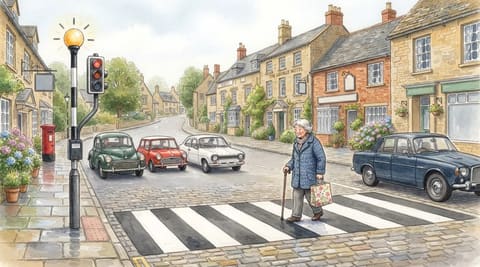 Cars and roads The Crossing That Waits for You
Look out the window! See the stripes painted across the street?
Build one with bricks
Between stories: 25 road trip games for kids · Road trip bingo cards · License plate game · Road trip trivia · Christmas light scavenger hunt · Christmas trivia
Town and county names: GeoNames (CC BY 4.0).