Trains, ships and planes
Did anyone build tracks with real gold?
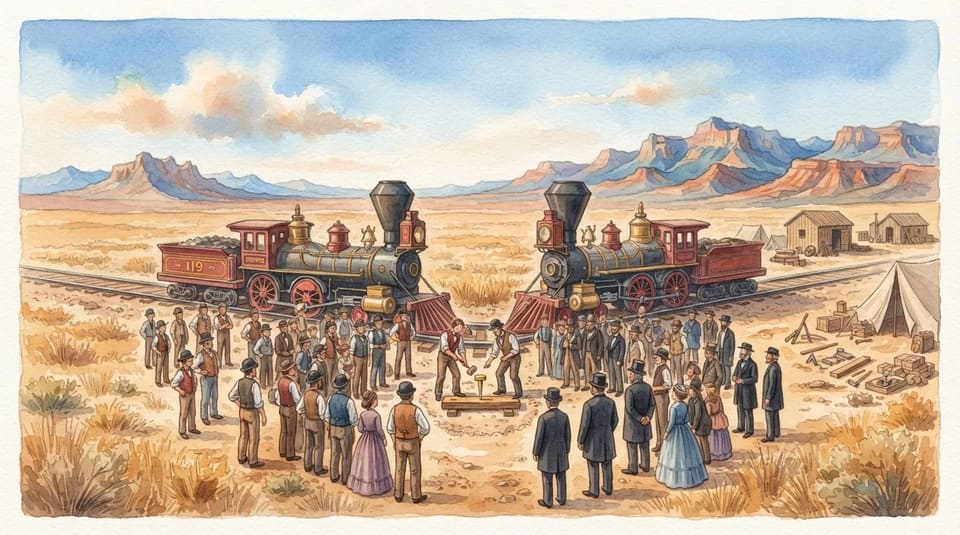
The golden spike, Utah. A true how-it-works story for kids 5–10.
How things work stories
The Promontory, Utah story, read aloud
On this ride, there are train tracks, and train rails are held down by spikes, like giant nails. Most spikes are plain iron. But did anyone ever build tracks with real gold? Long ago, before there were cars, no train went all the way across America. So two teams started building, one from the west and one from the east. They laid track toward each other, like two kids building a block road to meet in the middle. They worked for years, over mountains and across hot deserts.
If a train goes by, try counting its cars! Finally, the two tracks met in a high, flat place in Utah. A man named Leland Stanford was the boss of the western railroad. To celebrate, a special spike was made of real gold. It went into a shiny wooden bar that holds the rails. People say when Leland Stanford swung his big hammer, he missed the spike! But here's the thing.
Gold is soft, much softer than iron. Heavy trains would bend it. So right after the party, the gold spike came out, and a plain iron one went in. Now trains could cross the whole country. And the golden spike is kept safe in a museum at Stanford University in California.
Quiz the back seat
Why did they take the gold spike out of the track?
Show the answer
Gold is too soft for heavy trains. Right! Gold bends easily, so plain iron spikes hold the rails, and the gold one went to a museum.
Promontory, Utah facts for kids
- The golden spike was driven by Leland Stanford on May 10, 1869, at Promontory Summit, Utah.
- It joined the Central Pacific from Sacramento and the Union Pacific from Omaha.
- The spike is displayed at the Cantor Arts Center at Stanford University.
The Promontory, Utah story, read aloud
On this drive past the train tracks, here's a puzzle: did anyone ever build a railroad with real gold? The answer is yes, sort of, and it involves one very shiny spike. A spike is the big metal nail that pins a rail to the wooden boards underneath, called ties. In the 1860s, two crews raced to build the first railroad across America. One crew started in Sacramento, California, and the other in Omaha, Nebraska, and they laid track toward each other for years, through mountains and deserts.
On May 10, 1869, the two tracks finally met at a spot called Promontory Summit, in Utah. A San Francisco businessman named David Hewes had a grand idea: finish the job with a spike made of gold. So a foundry in San Francisco made one, with names carved into its sides, and workers set out a special tie of polished laurel wood. A railroad boss named Leland Stanford got the honor of hammering it in. But here's the twist.
Everyone was watching, and people say Stanford swung his hammer and missed! That might be the most famous oops in railroad history. Even so, the tracks were joined, and the first railroad across America was finished. If you spot train tracks, try counting the ties as they flash by. Today the golden spike rests safely in a museum at Stanford University in California, far from the rumble of any train.
Quiz the back seat
What happened when Leland Stanford swung the hammer at the golden spike?
Show the answer
People say he missed. Right! People say Stanford missed his swing, and today the golden spike is displayed in a museum at Stanford University.
Promontory, Utah facts for kids
- The golden spike was driven on May 10, 1869, at Promontory Summit, Utah, joining the Central Pacific and Union Pacific railroads.
- The idea came from San Francisco businessman David Hewes, and the spike was made by the William T. Garratt Foundry.
- The spike is displayed at the Cantor Arts Center at Stanford University.
Questions kids ask about Promontory, Utah
What was the golden spike?
It was a spike made of real gold, used to celebrate finishing the first railroad across America.
Where is the golden spike now?
It is kept in a museum at Stanford University in California.
Why isn't the gold spike still in the track?
Gold is too soft for heavy trains, so it was swapped for a plain iron spike.
For grown-ups
Written with AI from public sources, then a second AI checked its main claims against the sources below before it was published. Stories that don't pass stay off the app and this site. Our about page explains who writes and checks our stories. Narration is pre-recorded, and nothing you do on this page is tied to your kids.
Sources
- rail-fastener.com/supplier-of-high-quality-railroad-track-spikes.html
- archives.gov/milestone-documents/pacific-railway-act
- govinfo.gov/content/pkg/DCPD-201900295/html/DCPD-201900295.htm
- en.wikipedia.org/wiki/Promontory,_Utah
- uprr.com/content/uprr/htdocs/golden-spike/sacramento-promontory.html
- nps.gov/gosp/faqs.htm
- up.com/aboutup/community/great-race/golden-spike
- en.wikipedia.org/wiki/Golden_spike
More stories about how things work
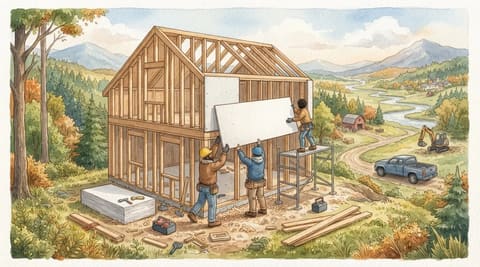 Who built that? The Secret Inside Your Walls
On this drive, with houses all along the street, every house has a secret hiding inside its walls. Most inside walls are made of drywall.
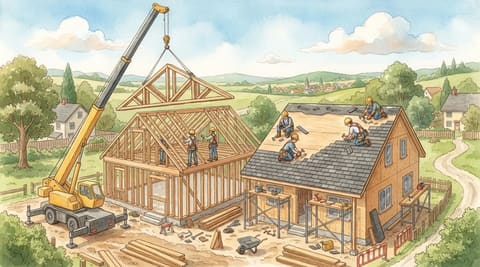 Houses How a House Gets Its Hat
Look at the houses along the street out your window. See the roofs on top?
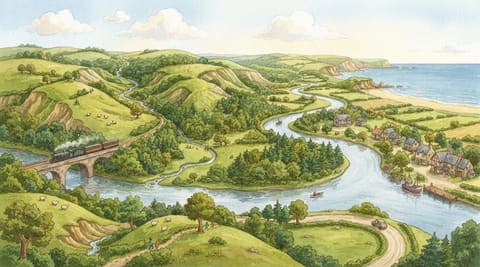 Inventors and firsts The Sand Grain's Long Trip
On this drive, we're rolling past hills. And those hills are slowly traveling!
 Mountains, trees and weather The Puzzle Pieces That Build Mountains
On this road, past the houses and the hills, the ground under us feels perfectly still. But it isn't!
Build one with bricks
Between stories: 25 road trip games for kids · Road trip bingo cards · License plate game · Road trip trivia · Christmas light scavenger hunt · Christmas trivia
Town and county names: GeoNames (CC BY 4.0).