Mountains, trees and weather
Why is Nebraska's river so wide and shallow?
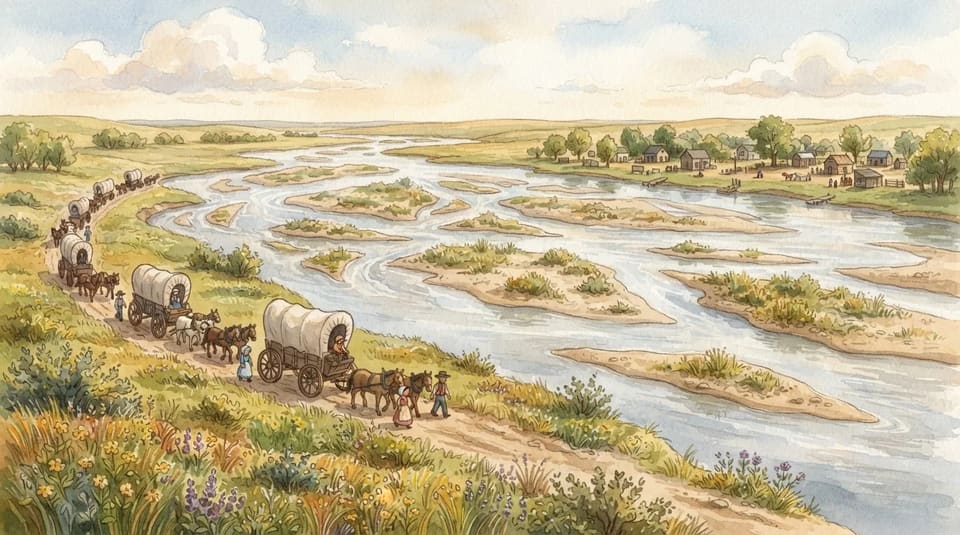
The Platte River's braids, Nebraska. A true how-it-works story for kids 5–9.
How things work stories
The Platte River story, read aloud
Have you ever seen a river that looks like a braid? In Nebraska, there is one! It's called the Platte, and it's very wide but very shallow, with a sandy bottom. Let's follow one tiny grain of sand to find out why. Meet Grain. Off Grain rolls, tumble, tumble, tumble! And Grain isn't alone.
Lots and lots of sand rides along too. Then the river reaches flat land and spreads out. The water slows down. Slow water is too weak to carry sand, so plop! Grain lands on a pile. Oops! Grain is stuck on a sandy island, and the sand keeps piling up around it.
Now the water has to squeeze around each island. So it splits into skinny streams that cross and join again. From above, it looks like braided hair! That is why the Platte is called a braided stream. Long ago, families in covered wagons followed this river west. And the Otoe people called it flat water. That word became the name Nebraska!
Quiz the back seat
Why does the Platte River split into lots of skinny streams?
Show the answer
Sand piles up into islands. Sand islands! The water squeezes around them, and that makes the braid. Just like poor stuck Grain!
Platte River facts for kids
- The Platte is a broad, shallow stream with a sandy bottom and many islands, called a braided stream.
- Its name Nebraska comes from an Otoe word meaning flat water.
- Big wagon trails like the Oregon Trail followed the Platte River valley west.
Questions kids ask about Platte River
Why is the Platte River so shallow?
It carries so much sand that the sand spreads out and fills the riverbed, leaving the water wide and thin.
What is a braided river?
A braided river splits around sandy islands into many skinny streams that cross and join again, like braided hair.
How did Nebraska get its name?
It comes from the Otoe people's name for the Platte, which means flat water.
For grown-ups
Written with AI from public sources, then a second AI checked its main claims against the sources below before it was published. Stories that don't pass stay off the app and this site. Our about page explains who writes and checks our stories. Narration is pre-recorded, and nothing you do on this page is tied to your kids.
Sources
More stories about how things work
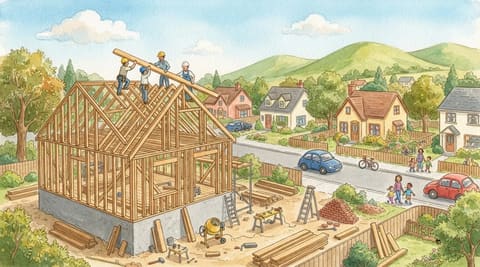 Houses The Secret Skeleton in Your Walls
Look out the window at all the houses along the street. Every one of them was built in a special order, like a giant puzzle.
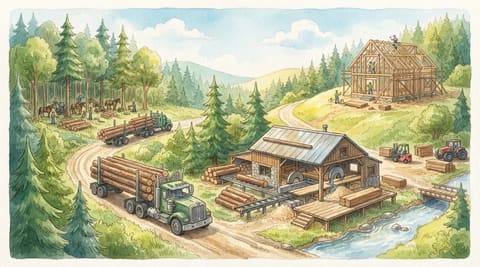 Houses The Secret Trees Inside Houses
Look at the houses out the window, along the street and up on the hills. Lots of houses have a secret skeleton hiding inside their walls…
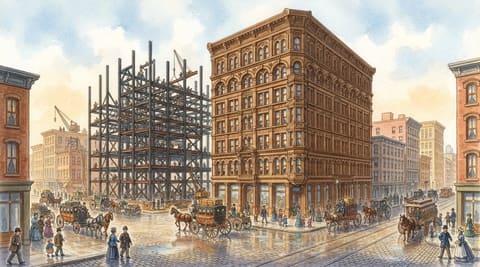 Who built that? The Building With Bones
On this drive past the skyline, every tall tower you see is hiding a secret inside its walls. Each one has a skeleton!
 Mountains, trees and weather The Slow Push That Makes Mountains
On this road, the ground under our car feels still and solid. But it is moving, very slowly!
Between stories: 25 road trip games for kids · Road trip bingo cards · License plate game · Road trip trivia · Christmas light scavenger hunt · Christmas trivia
Town and county names: GeoNames (CC BY 4.0).