Madam C. J. Walker for kids: a true picture book
Madam Walker's Wonderful Hair Grower. 10 pages, fact-checked, at three reading levels, read aloud.
Madam C. J. Walker (1867–1919)
The lesson: Solve a real problem, then teach other people to earn from it too.


Scan with your iPhone cameraor open it in your browser
Books about business and makers
Who was Madam C. J. Walker?
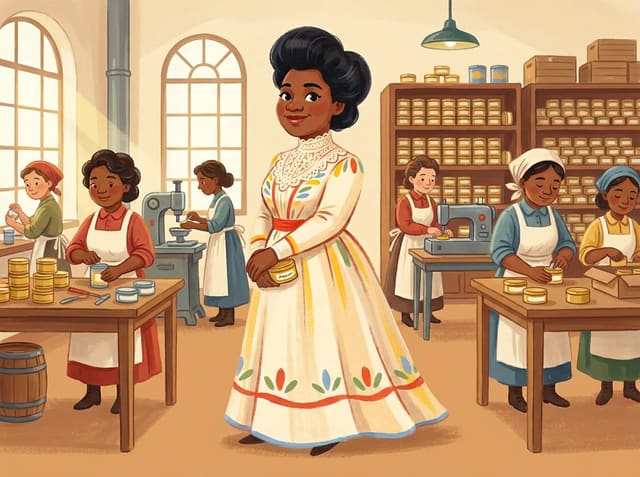
Madam C. J. Walker (1867–1919) was a businesswoman who made hair-care products for Black women. Born Sarah Breedlove in Louisiana, she was the first child in her family born free. She built a factory in Indianapolis and trained thousands of women to sell her products and earn their own money.
| Born | 1867 |
|---|---|
| Died | 1919 |
| Known for | hair-care entrepreneur |
| The lesson | Solve a real problem, then teach other people to earn from it too. |
| Topics | Business and makers |
| The book | 10 pages, 3 reading levels, read aloud |
Read the first pages free
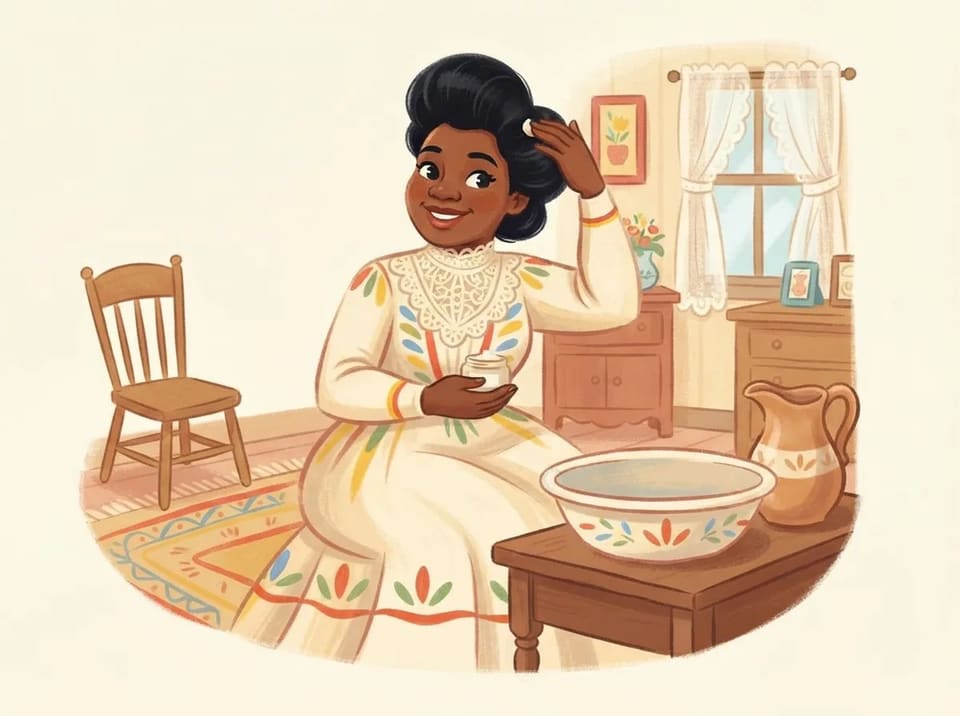
Long ago in America, most homes had no water pipes. To make their curls straight, many women rubbed goose fat or even bacon grease into their hair. It hurt their hair!
Picture a home in America more than 100 years ago: no running water inside and no electric lights. Back then, straight hair was praised as the prettiest kind, and many women rubbed goose fat, soap or even bacon grease into their curls to straighten them. It damaged their hair and their scalps.
Picture an American home more than a hundred years ago: most had no indoor plumbing, no central heating and no electricity. Long after slavery ended, many people still looked down on Black Americans' natural hair, and the media held up straight hair as the ideal. To straighten their curls, many women rubbed in goose fat, heavy oils, soap or even bacon grease. It damaged both their hair and their scalps.
Page 1 of 10
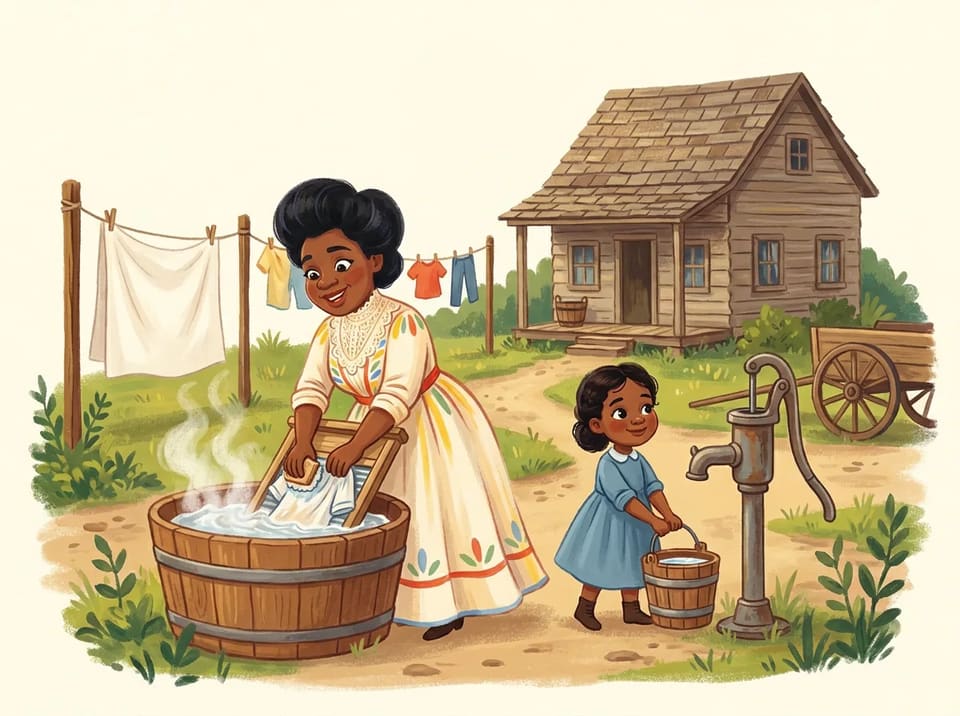
Sarah scrubbed other people's clothes in a big tub. Scrub, scrub! It paid very little. But Sarah had a big wish: to earn enough to send her girl to school.
Sarah Breedlove's parents had once been enslaved. When Sarah grew up, she moved to St. Louis with her daughter, Lelia. There she scrubbed other people's clothes for barely more than a dollar a day. But Sarah had a wish: to earn enough to give Lelia a real education.
Sarah Breedlove was born in 1867 in Delta, Louisiana, to parents who had been enslaved, and by the age of seven she was an orphan. In 1888 she moved with her daughter, Lelia, to St. Louis, where three of her brothers lived. She found work as a laundress, scrubbing other people's clothes for barely more than a dollar a day. Sarah was determined to earn enough money to give Lelia a formal education.
Page 2 of 10
Madam C. J. Walker: a timeline of true facts
- In Walker's time, most Americans did not have indoor plumbing, central heating, or electricity. source
- Some women used everyday substances on their hair that damaged their hair and scalps. source
- Hair care could take a long time and was a way to create beauty. source
- After slavery ended, negative attitudes about Black people's appearance and hair continued. source
- Media promoted straight hair as part of a European beauty ideal. source
- 1902 Hair-care entrepreneur Annie Turnbo Malone gave away free treatments to attract customers. source
- 1867 Sarah Breedlove was born in Louisiana to parents who had been enslaved, and she became an orphan at seven. source
- 1888 Sarah moved to St. Louis with her daughter Lelia and worked washing clothes. source
- Sarah was determined to earn enough to give Lelia a formal education. source
- Walker wanted to help other Black women become financially independent. source
- Sarah had severe dandruff, scalp problems, and hair loss. source
- 1904 Sales at the St. Louis World's Fair were disappointing because the African-American community was largely ignored. source
- Sarah first learned about hair care from her brothers, who were barbers. source
- Sarah tried homemade remedies and products from stores, including Annie Malone's products. source
- 1904 Sarah became a sales agent for Annie Malone, who had her own hair-care company. source
- Walker and Malone had a disagreement, and Walker left Malone's company. source
- 1905 In Denver, Sarah worked on her own hair-care business while still selling Malone's products. source
- A Denver druggist helped Sarah develop an ointment for scalp disease. source
- 1906 After marrying Charles Walker, she used the name Madam C. J. Walker and sold her hair grower around Denver. source
- 1910 By August 1910, Walker had 950 sales agents and thousands of salon clients. source
- Walker traveled to sell products door to door and demonstrate treatments in churches and lodges. source
- 1908 In Pittsburgh, Walker opened a beauty parlor and a college to train hair culturists. source
- 1910 Walker moved her business headquarters to Indianapolis. source
- 1917 Walker's company said it had trained nearly 20,000 women by 1917. source
- Many employees at Walker's company, including people in important management jobs, were women. source
Questions kids ask about Madam C. J. Walker
What was Madam C. J. Walker's real name?
Her name at birth was Sarah Breedlove. She was born in 1867 near Delta, Louisiana, and was her parents' first child born into freedom. She became known as Madam C. J. Walker after she married Charles Joseph Walker. source
What did Madam C. J. Walker invent?
She created her own line of hair-care products and a hair-care system. She had suffered from hair problems, including baldness. She learned about hair care from her brothers, who were barbers, and worked for Annie Malone, an African American hair-care businesswoman, before making her own products. source
How did Madam C. J. Walker help other women?
Walker and her company employed several thousand women as sales agents, giving them a way to earn their own money. She also showed Black women how to budget and build businesses, and she gave money to groups like the NAACP. source
Was Madam C. J. Walker a millionaire?
Guinness World Records has listed her as the first woman in America to become a self-made millionaire. When she died in 1919, people thought she was worth between half a million and a million dollars, which made her the wealthiest Black woman in America. source
3 reading levels
- Read to me (ages 3–5)
- Read together (ages 6–8)
- I'll read (ages 9–12)
The same true story, written three ways. Little kids hear short, bouncy lines; big kids get the details and the numbers.
Quiz time
What did Sarah wish for her daughter?
Show the answer
A real education at school.
Try this at home
- Show, don't just tell: teach someone to fold a paper boat twice, once with only words and once by showing each step. Which way worked better?
- Make a label: invent a name for a pretend hair cream with your own name in it, like Walker's Wonderful Hair Grower, and draw it on a clean jar or tin.
- Be the teacher: brush or braid a doll's hair while you explain each step out loud, then let a family member try it while you coach.
More true heroes




Read the whole book tonight.
On iPhone, iPad and Android, and in any web browser.
Scan with your iPhone cameraor open it in your browser
Business and makers for kids · Women inventors for kids · Black inventors for kids · All heroes