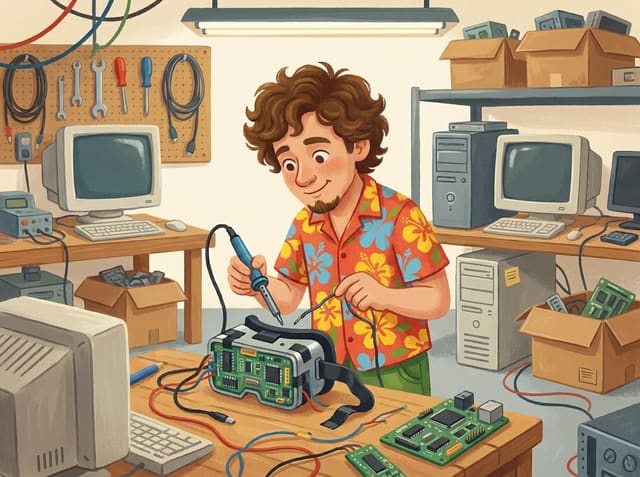
Palmer Luckey for kids: a true picture book
Palmer Bends the Picture. 10 pages, fact-checked, at three reading levels, read aloud.
Palmer Luckey (born 1992)
The lesson: You do not need permission to start building. Start with what you have.


Scan with your iPhone cameraor open it in your browser
Who is Palmer Luckey?
Palmer Luckey is the American inventor of the Oculus Rift, a virtual reality headset. As a teenager in Long Beach, California, he built his own headsets in his parents' garage. Facebook bought his company, Oculus, in 2014. In 2017 he co-founded Anduril Industries, which builds defense technology.
| Born | 1992 |
|---|---|
| Known for | inventor of the Oculus Rift |
| The lesson | You do not need permission to start building. Start with what you have. |
| Topics | Inventors, Robots and computers |
| The book | 10 pages, 3 reading levels, read aloud |
Read the first pages free
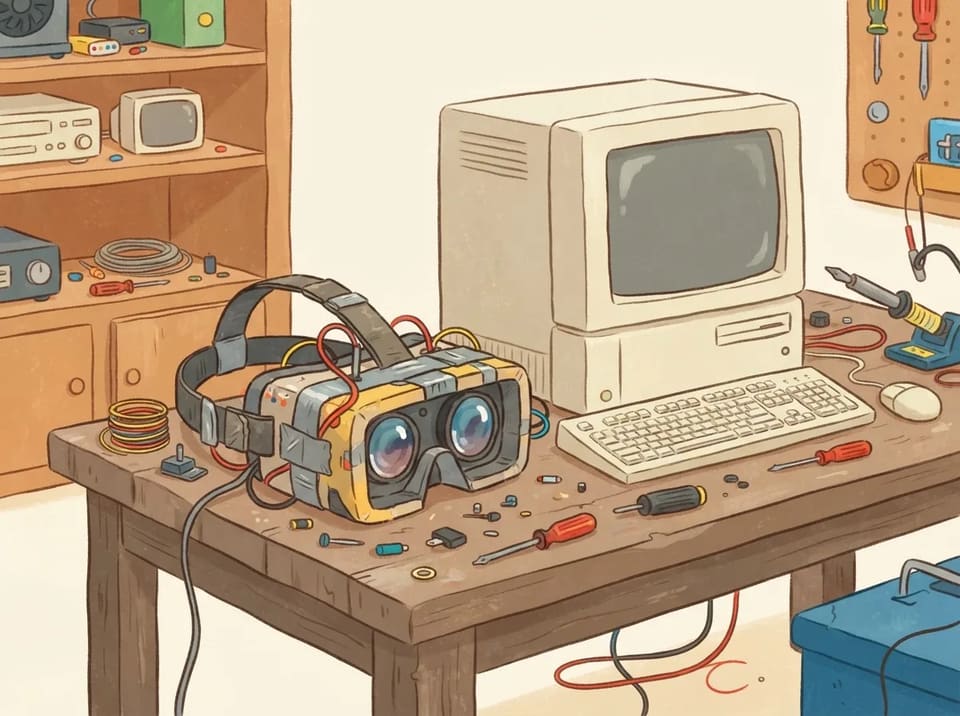
Not long ago, people dreamed of a headset that could take them into a pretend world. Big companies tried and tried. But their computers were not good enough yet.
For many years, people dreamed of stepping into a whole new, made-up world. A virtual reality headset tries to do it: a small screen sits in front of your eyes, and you look around inside that world. Companies spent huge amounts of money on it. But computers were not powerful enough yet.
For decades, people dreamed of stepping into a world that was artificial and entirely new. Virtual reality promised it: a headset puts a small screen in front of your eyes, and you can look around an artificial world, move through it and handle things inside it. In the 1980s and 1990s, companies poured billions of dollars into research. But computers simply were not advanced enough yet.
Page 1 of 10
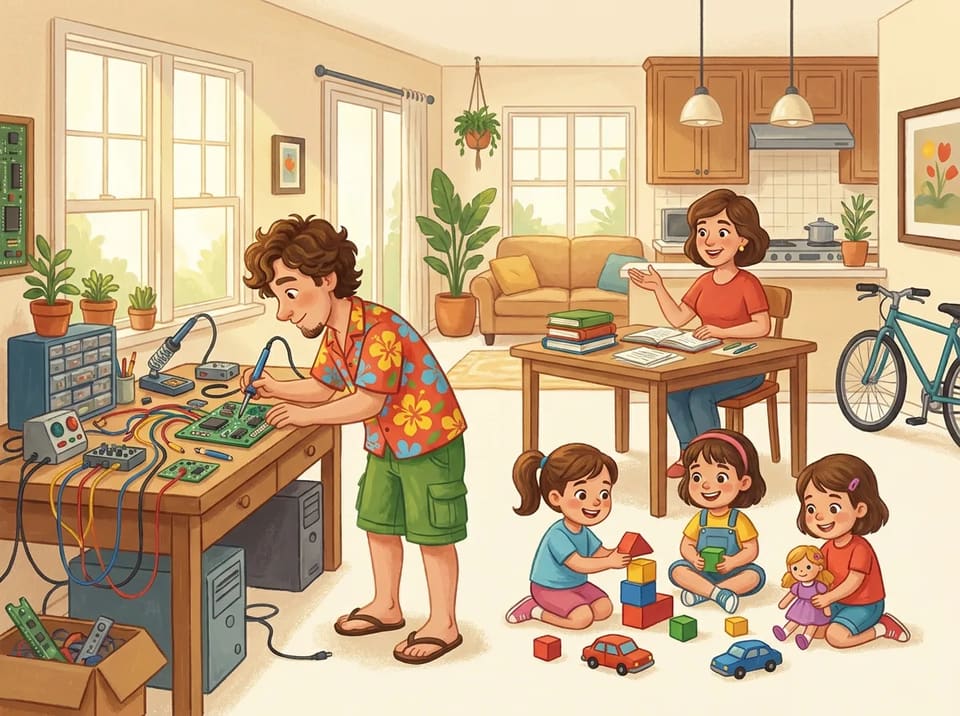
Palmer grew up in Long Beach with three little sisters. He loved gadgets, and he built a game computer with six screens! He wanted to make a better headset that gamers could afford.
Palmer grew up in Long Beach, California, with his younger sisters. His mother taught him at home, and he fell hard for electronics. As a teen he built a gaming computer with six screens! He wanted a headset that worked better than any on sale, at a price gamers could pay.
Palmer Luckey grew up in Long Beach, California. Homeschooled by his mother, he took sailing lessons and developed an intense interest in electronics and engineering. He was a serious gamer, too: as a teenager he built a gaming computer worth tens of thousands of dollars, with an elaborate six-monitor setup. His idea was bigger still: a new head-mounted display that worked better than anything on the market and cost little enough for gamers like him.
Page 2 of 10
Palmer Luckey: a timeline of true facts
- People could use virtual reality equipment to look around and interact with an artificial world. source
- A virtual reality headset could show a small screen in front of a person's eyes. source
- As a teenager, Palmer played games on a computer with six monitors. source
- For decades, people dreamed of experiencing a completely new artificial world. source
- Companies had spent years researching virtual reality, but the computers of the time were not advanced enough. source
- When Palmer began experimenting, many people thought virtual reality had no future. source
- Palmer grew up in Long Beach, California, with three younger sisters. source
- As a child, Palmer became intensely interested in electronics and engineering. source
- Palmer wanted to make a headset that worked better than existing ones and was inexpensive for gamers. source
- Existing headsets had narrow views, slow responses, and high prices, and were bulky and heavy. source
- Palmer said his best old headset weighed six pounds and had a narrow view. source
- 2009 At sixteen, Palmer started building headsets of his own design. source
- He finished an early model called PR1 in his parents' garage when he was seventeen. source
- Palmer earned money for his projects by repairing phones and doing other jobs. source
- He tested different features while making his headsets smaller and lighter. source
- Palmer shared updates with other virtual reality enthusiasts online. source
- Game maker John Carmack asked to try a headset, and Palmer lent him one for free. source
- 2012 Carmack showed a game running on Palmer's headset at a major video game event. source
- 2012 When Palmer showed his headset to his new business partners, they tried it and found that it really worked. source
- 2012 The Kickstarter campaign for the Rift raised $2.4 million, far more than its original target. source
- Palmer used software to fix the distortion caused by a lens that gave the headset a wide view. source
- Palmer kept building and experimenting, making more than fifty headsets. source
- 2013 The first Rift development kit was released in March 2013. source
- 2016 A Rift made for the general public was released in 2016. source
- Palmer's headset is widely credited with helping bring the virtual reality industry back to life. source
Questions kids ask about Palmer Luckey
What did Palmer Luckey invent?
Palmer Luckey designed the Oculus Rift, a virtual reality headset. Many people credit it with bringing the virtual reality industry back to life. He started the company Oculus VR in 2012 to sell it through a Kickstarter campaign, which raised $2.4 million. source
How old was Palmer Luckey when he built his first VR headset?
Palmer was 16 when he began building his own virtual reality headsets in 2009. He finished his first prototype, called PR1, at age 17 in his parents' garage. In all, he built more than 50 headsets. source
Did Palmer Luckey go to college?
Yes, for a while. Palmer was homeschooled by his mother and began taking college classes at 14 or 15. He later studied journalism at California State University, Long Beach, but he left to work on the Oculus Rift full-time. source
What is Anduril?
Anduril Industries is a military technology company that Palmer Luckey co-founded in 2017. It builds systems that can work on their own, such as drones, along with sensor towers, and it sells them to the U.S. Department of Defense. Some of what it builds are weapons, including a family of cruise missiles called Barracuda. source
Does Palmer still work on Oculus?
No. Palmer left Facebook, which owned Oculus by then, in March 2017 and stopped working on Oculus. He co-founded Anduril that same year. source
Did Palmer Luckey make a video game console?
Yes. In June 2024 he set up ModRetro again, this time as a company that makes game consoles. Its first product, the Chromatic, is a handheld that plays original Game Boy games. The name goes back to 2009, when he and a friend started the ModRetro Forums, an online group for people who turn old game consoles and computers into portable ones. source
Does this picture book talk about Anduril or weapons?
No. The book tells one story, how Palmer built the Oculus Rift, and it ends with people trying the Rift at game fairs. Anduril, weapons and Facebook never come up in its 10 pages, at any reading level. If your child asks what Palmer does now, that one is yours to answer, and the questions above give you the facts. source
What age is this book for?
It's written three ways from the same true story, for ages 3 to 5, 6 to 8 and 9 to 12. The youngest version has 176 words and about a minute and a half of narration, and the oldest has 476 words and a little over three minutes. The versions also differ in what they tell. Only the 9-to-12 text says that some of his early projects hurt him badly. source
Is this the right book for my child?
It's best for a child who takes things apart or builds the same thing again and again, because much of the book is Palmer building and rebuilding headsets, more than 50 of them. It isn't a full life story, so it won't do for a school report on what he did after the Rift. source
Where do the facts in this book come from?
Every page is written from the dated facts in the timeline on this page, and each fact links to its source. All 16 come from Wikipedia's articles on Palmer Luckey and Oculus VR, and the book uses 13 of them. An AI model wrote the pages from those facts, and an AI checker compared each page against them. Tumbly is made by Winding AI, Inc. If you spot a mistake, email support@winding.ai and we'll fix it. source
3 reading levels
- Read to me (ages 3–5)
- Read together (ages 6–8)
- I'll read (ages 9–12)
The same true story, written three ways. Little kids hear short, bouncy lines; big kids get the details and the numbers.
Quiz time
What did Palmer want to build?
Show the answer
A better headset gamers could afford.
Try this at home
- Roll a sheet of paper into a narrow tube and look around the room through it. Then look without it. That is the difference between the narrow view of old headsets and a wide one.
- Look at a page of straight lines through a magnifying glass or the bottom of a clear glass. Do the lines bend? That is the warping Palmer had to fix.
- Draw a smiley face on a balloon before you blow it up, then blow it up and see how it stretches. Now try drawing it squished on a new balloon so it looks right when full. That is Palmer's trick: bend the picture first.
More true heroes
Read the whole book tonight.
On iPhone, iPad and Android, and in any web browser.
Scan with your iPhone cameraor open it in your browser
Inventors for kids · Robots and computers for kids · All heroes