Inventors and firsts
Where does rain go after the road?
Where storm drains send rain. A true how-it-works story for kids 6–10.
How things work stories
The Storm drain story, read aloud
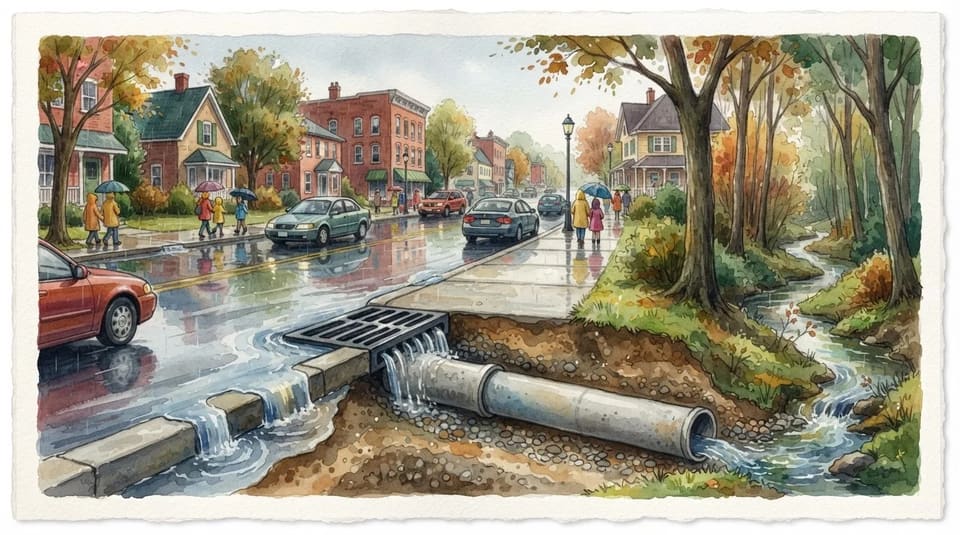
On this road, rain is splashing down right now, and every drop has to go somewhere. Most of it ends up in a storm drain, that metal grate by the curb that swallows rainwater. So where does a storm drain actually lead? Let's follow one raindrop. It lands on the road and tries to soak in, but pavement is impervious, a fancy word meaning water can't get through.
Rooftops, sidewalks and parking lots are the same, like a raincoat for the whole town. So our raindrop slides sideways into the gutter, races along the curb, and drops through the grate into a dark pipe underneath the street. It's basically an underground waterslide, with no lifeguard and no line. If the car passes a curb right now, see if you can spot a grate gulping water. Now the surprise.
Many storm drains don't send water to a cleaning plant at all. The pipe pops out right into a river or stream. So if our raindrop picked up oil from a parking lot, or soap, or a dropped wrapper, all of that rides along with it, straight to the fish. The road and the river are secretly connected by a pipe. Whatever goes down the street drain is really going into the water.
Quiz the back seat
What happens when more rain falls than the storm drain pipes can hold?
Show the answer
Water backs up and streets can flood. Right! When rain beats what the pipes can hold, water backs up and streets can flood.
Storm drain facts for kids
- Many storm drain systems are gravity sewers that send untreated rainwater into rivers or streams.
- Storm drains collect rain from paved streets, parking lots, sidewalks and roofs.
- In very heavy rain, drains can overflow and cause street and basement flooding.
For grown-ups
Written with AI from public sources, then a second AI checked its main claims against the sources below before it was published. Stories that don't pass stay off the app and this site. Our about page explains who writes and checks our stories. Narration is pre-recorded, and nothing you do on this page is tied to your kids.
Sources
- stpete.org/residents/utilities/stormwater_pavement_and_traffic_operations/index.php
- newarkde.gov/DocumentCenter/View/21458/General-Stormwater-Pamphlet_final
- cityofvacaville.gov/government/public-works/environmental-sustainability-and-energy/stormwater
- en.wikipedia.org/wiki/Storm_drain
- fayettevillenc.gov/City-Departments/Public-Services/Stormwater
- durhamnc.gov/864/Impervious-Surface
- raleighnc.gov/stormwater/services/stormwater-utility-fee/impervious-surface
- seattle.gov/utilities/your-services/sewer-and-drainage/drainage-issues
More stories about how things work
 Inventors and firsts The First Thing Scanners Bought
See all those shops we're passing? At their checkouts, a little red light reads black stripes on every box.
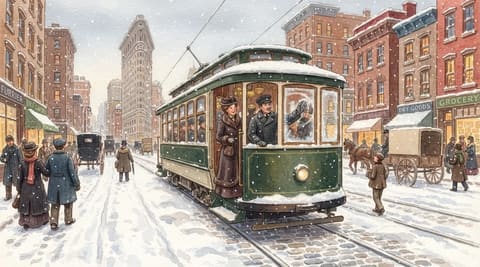 Inventors and firsts The Lady Who Wiped the Snow
Here in our car, look at the bottom of the big front window. See those long skinny arms?
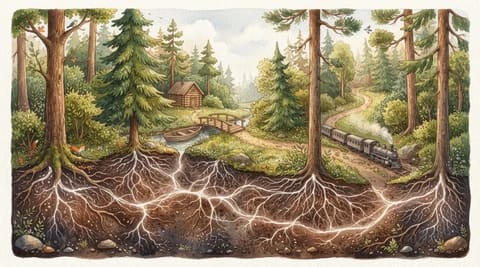 Mountains, trees and weather Trees Holding Hands Underground
On this drive, we're passing lots of trees. Under them is a hidden world of tiny threads.
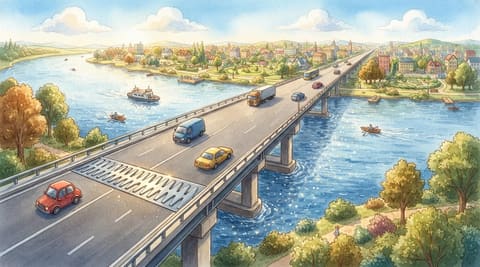 Who built that? The Bridge That Grows
Out the window is the highway, with bridges and overpasses carrying our road over rivers and other roads. And every bridge has a secret…
Build one with bricks
Between stories: 25 road trip games for kids · Road trip bingo cards · License plate game · Road trip trivia · Christmas light scavenger hunt · Christmas trivia
Town and county names: GeoNames (CC BY 4.0).